Grades:
Median GPA:
Mean GPA:
Search Results
| Name | Grades | Rating |
|---|---|---|
A+ | ||
A+ | ||
A+ | ||
A+ | ||
A+ | ||
A+ | ||
A+ | ||
A+ | ||
A+ | ||
A+ | ||
A+ | ||
A+ | ||
A+ | ||
A+ | ||
A+ | ||
A+ | ||
A+ | ||
A+ | ||
A+ | ||
A+ | ||
 My Planner
Explore and compare past grades, professor ratings, and reviews to find the perfect class.
Grades:
Median GPA:
Mean GPA:
Search Results
| Name | Grades | Rating |
|---|---|---|
A+ | ||
A+ | ||
A+ | ||
A+ | ||
A+ | ||
A+ | ||
A+ | ||
A+ | ||
A+ | ||
A+ | ||
A+ | ||
A+ | ||
A+ | ||
A+ | ||
A+ | ||
A+ | ||
A+ | ||
A+ | ||
A+ | ||
A+ | ||
Grades:
Median GPA:
Mean GPA:
5.0
Professor rating
5.0
Difficulty
1,000
Ratings given
99%
Would take again
Visit Rate My Professors
Grades:
Median GPA:
Mean GPA:
Search Results
| Name | Grades | Rating |
|---|---|---|
A+ | ||
A+ | ||
A+ | ||
A+ | ||
A+ | ||
A+ | ||
A+ | ||
A+ | ||
A+ | ||
A+ | ||
A+ | ||
A+ | ||
A+ | ||
A+ | ||
A+ | ||
A+ | ||
A+ | ||
A+ | ||
A+ | ||
A+ | ||
Search Results
| Name | Grades | Rating |
|---|---|---|
A+ | ||
A+ | ||
A+ | ||
A+ | ||
A+ | ||
A+ | ||
A+ | ||
A+ | ||
A+ | ||
A+ | ||
A+ | ||
A+ | ||
A+ | ||
A+ | ||
A+ | ||
A+ | ||
A+ | ||
A+ | ||
A+ | ||
A+ | ||
Search Results
| Name | Grades | Rating |
|---|---|---|
A+ | ||
A+ | ||
A+ | ||
A+ | ||
A+ | ||
A+ | ||
A+ | ||
A+ | ||
A+ | ||
A+ | ||
A+ | ||
A+ | ||
A+ | ||
A+ | ||
A+ | ||
A+ | ||
A+ | ||
A+ | ||
A+ | ||
A+ | ||
Search Results
| Name | Grades | Rating | |||
|---|---|---|---|---|---|
Not teaching in Spring 2026 | |||||
PHYS 6301 Chuanwei Zhang | |||||
A- | |||||
Search Results
| Name | Grades | Rating | |||
|---|---|---|---|---|---|
Not teaching in Spring 2026 | |||||
PHYS 6301 Chuanwei Zhang | |||||
A- | |||||
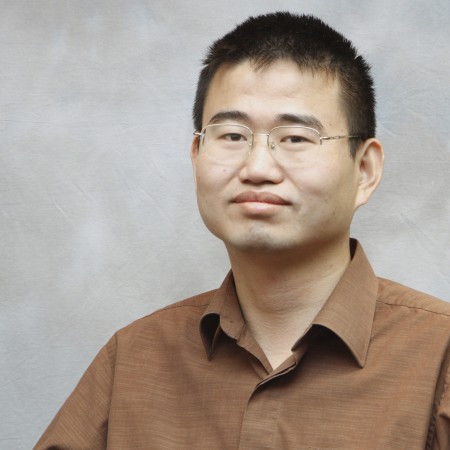
Grades: 111
Median GPA: A
Mean GPA: 3.416
1.2
Professor rating
4.8
Difficulty
9
Ratings given
N/A
Would take again
Quantum Mechanics II
School of Natural Sciences and Mathematics
Non-relativistic many-particle systems and their second quantization description with creation and annihilation operators; Interactions and Hartree-Fock approximation, quasi-particles; attraction of fermions and superconductivity; repulsion of e bosons and super fluidity; lattice systems, classical fields and canonical quantization of wave equations; free electromagnetic field, gauges and quantization: photons; coherent states; Interaction of light with atoms and condensed systems: emission, absorption and scattering; vacuum fluctuations and Casimir force; elements of relativistic quantum mechanics: Klein-Gordon and Dirac equations; particles and antiparticles; spin-orbit coupling; fine structure of the hydrogen atom; micro-causality and spin-statistics theorem; non-relativistic scattering theory: scattering amplitudes, phase shifts, cross-section and optical theorem; Born series; inelastic and resonance scattering; perturbative analysis of the interacting fields: Time evolution and interaction representation, S-matrix and Feynman diagrams; simple scattering processes; Dyson's equation, self-energy and renormalization. 3 credit hours.
Prerequisite: PHYS 6300.
Offering Frequency: Each year
Grades: 24
Median GPA: A-
Mean GPA: 3.653
Click a checkbox to add something to compare.
Grades: 111
Median GPA: A
Mean GPA: 3.416
1.2
Professor rating
4.8
Difficulty
9
Ratings given
N/A
Would take again
Quantum Mechanics II
School of Natural Sciences and Mathematics
Non-relativistic many-particle systems and their second quantization description with creation and annihilation operators; Interactions and Hartree-Fock approximation, quasi-particles; attraction of fermions and superconductivity; repulsion of e bosons and super fluidity; lattice systems, classical fields and canonical quantization of wave equations; free electromagnetic field, gauges and quantization: photons; coherent states; Interaction of light with atoms and condensed systems: emission, absorption and scattering; vacuum fluctuations and Casimir force; elements of relativistic quantum mechanics: Klein-Gordon and Dirac equations; particles and antiparticles; spin-orbit coupling; fine structure of the hydrogen atom; micro-causality and spin-statistics theorem; non-relativistic scattering theory: scattering amplitudes, phase shifts, cross-section and optical theorem; Born series; inelastic and resonance scattering; perturbative analysis of the interacting fields: Time evolution and interaction representation, S-matrix and Feynman diagrams; simple scattering processes; Dyson's equation, self-energy and renormalization. 3 credit hours.
Prerequisite: PHYS 6300.
Offering Frequency: Each year
Grades: 24
Median GPA: A-
Mean GPA: 3.653
Click a checkbox to add something to compare.